






There are no products in the cart!

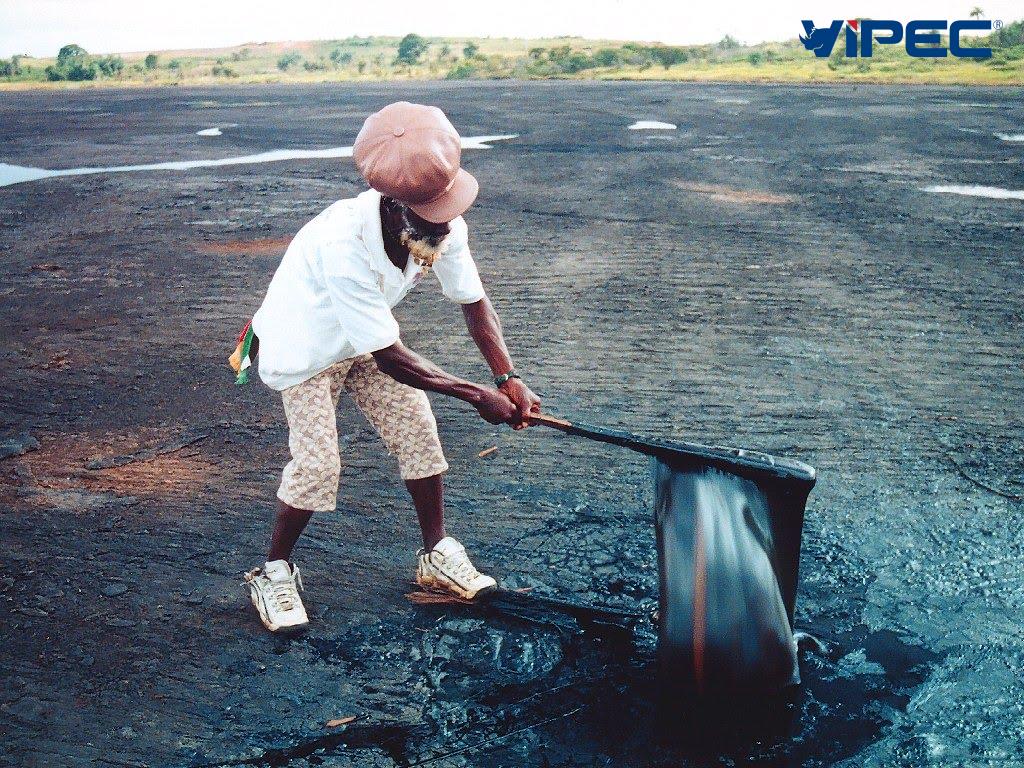
The history of asphalt begins thousands of years before the establishment of the United States. Asphalt exists naturally in two main forms: asphalt lakes and rock asphalt (a mixture of sand, limestone, and asphalt).
Since ancient times, humans have known how to exploit and use this material for various purposes:
The ancient Mesopotamians used asphalt to waterproof water tanks and religious structures.
The Phoenicians used asphalt to seal the joints on merchant ships.
The Egyptians during the Pharaohs used it as mortar to bind stones along the Nile River to prevent erosion and to waterproof Moses’ basket.

The Phoenicians used asphalt to seal the joints on merchant ships
625 BC: The first recorded use of asphalt as a road construction material in Babylon.
The Greeks and Romans later also used asphalt to seal baths, reservoirs, and aqueducts.
From there, the term “asphalt” was born, derived from the Greek word “asphaltos” – meaning “solid”.
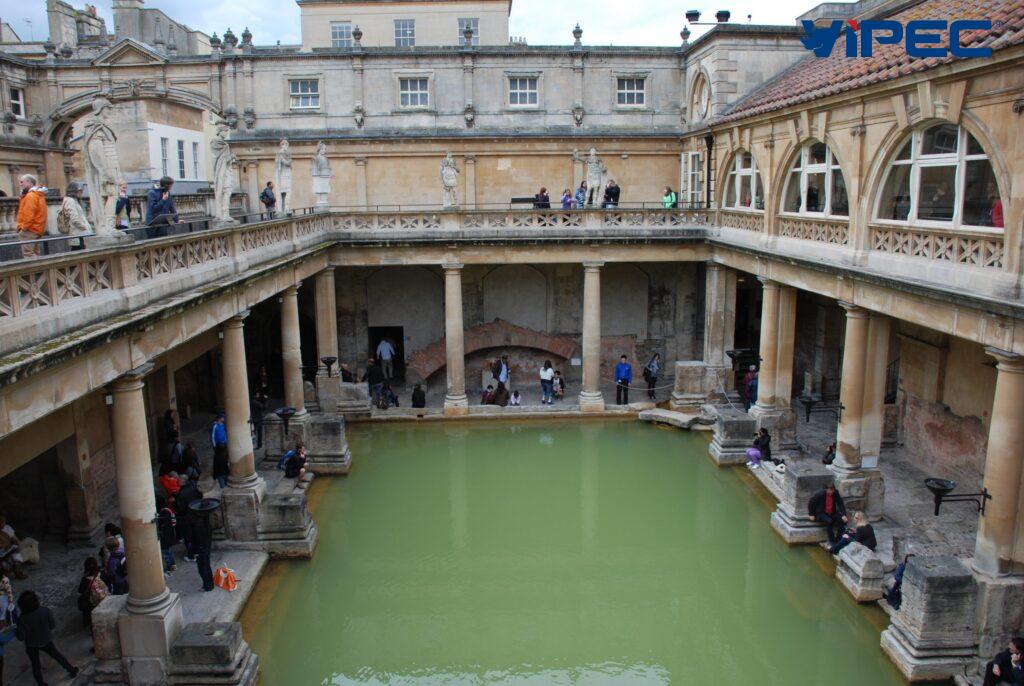
Remnants of a bath sealed with asphalt
3. Asphalt in the Age of Exploration and Mechanization
1595: European explorers discovered natural asphalt deposits in the New World, notably the asphalt lake in Trinidad described in detail by Sir Walter Raleigh and used for ship repairs.
In the early 1800s:
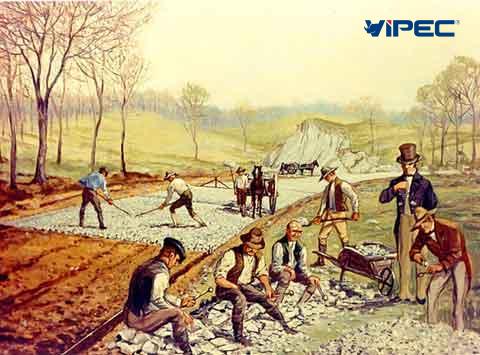
Engineer Thomas Telford built over 900 miles of roads in Scotland by scientifically layering crushed stone.
At the same time, John Loudon McAdam introduced the method of spreading small stones and compacting them to create a hard surface.
To increase durability and reduce dust, contractors began using hot tar to bind stones, creating “tarmacadam” – the precursor to modern asphalt pavement.
1870:
Belgian chemist Edmund J. DeSmedt laid the first asphalt concrete surface in Newark, New Jersey.
He was also responsible for paving over 45,000 m² of Pennsylvania Avenue (Washington, D.C.) with asphalt from Trinidad.
Cummer Company opened the first hot mix plant in the U.S.
Nathan B. Abbott (Brooklyn, NY) filed the first asphalt patent in 1871.
1900:
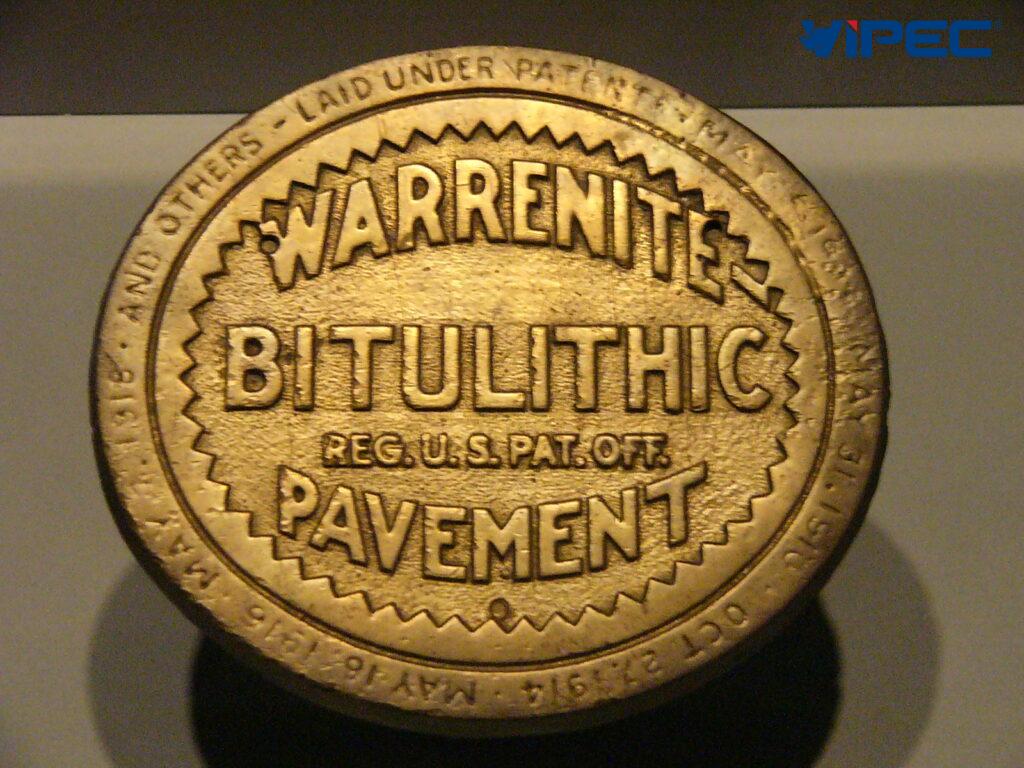
Frederick J. Warren patented the “Bitulithic” pavement – a mixture of bitumen and crushed stone (“bitu” from bitumen, “lithic” from lithos in Greek, meaning stone).
The first modern asphalt plant was built in 1901 in East Cambridge, Massachusetts by Warren Brothers.
1907: The production of asphalt from refined petroleum surpassed the extraction of natural asphalt.
The development of automobiles increased the demand for higher-quality roads, leading to major improvements: Drum mixers – Automated asphalt pavers – Mechanical grading technology
1942: World War II required runways and roads to bear heavy loads, significantly advancing asphalt production and construction technology.

1956: The U.S. enacted the Federal-Aid Highway Act worth $51 billion to develop the federal highway system. This led to an explosive demand for large-capacity, precise, and efficient mixing equipment.
New technologies included: Electronic weighing systems; Two-lane pavers; Large steel-wheeled rollers

1970s:
The global energy crisis highlighted the need for resource conservation and recycling. Since then, large amounts of used asphalt have been reclaimed and recycled into new mixtures. Today, asphalt is the number one recycled material in the U.S. – surpassing paper, aluminum, and glass. Over 70 million tons of recycled asphalt are used each year.

1986:
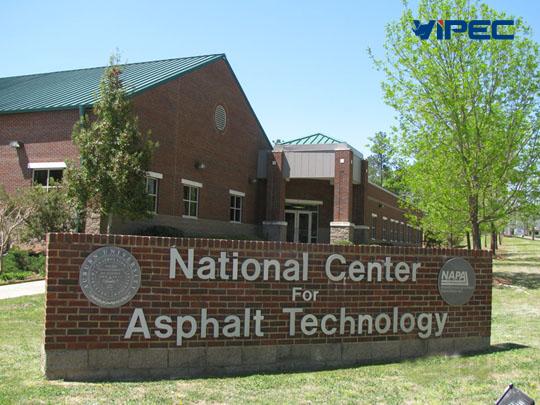
The National Center for Asphalt Technology (NCAT) was established at Auburn University in Alabama. This is the world’s leading asphalt research center with test tracks and internationally standard laboratories.
2002: The U.S. Environmental Protection Agency (EPA) officially removed asphalt plants from the list of heavily polluting industries, thanks to the adoption of dust filtration technology and clean processes.

Today, asphalt is not only the dominant road construction material globally but has also become one of the symbols of the green construction industry. Mixing plant technology is increasingly advanced, integrating: Automated control; RAP recycling; Fuel savings; Dust and greenhouse gas emission reductions.

The Hot Mix Asphalt Plant is a specialized equipment system for producing asphalt mixtures through: Heating raw materials (stone, sand, mineral powder), Mixing with asphalt at high temperatures, Discharging hot asphalt mixtures for paving.
Classification:
Batch Mix Plant: Quality control for each batch, easy to change the mix design.
Drum Mix Plant: High capacity, continuous operation, cost-effective.
As a strategic partner of Tietuo Machinery (TTM) – a top brand of mixing plants in Asia, VIPEC provides a range of hot mix asphalt plants:
With four main lines:
VIPEC – Sustainable mixing plant solutions for the future of transportation in Vietnam!
📞 Hotline: 1900 636 341
📧 Email: info@vipec-vp.vn
🌐 Website: vipec-vp.vn
From Moses’ waterproof basket to modern transnational highways, asphalt and mixing plants have accompanied the historical development of humanity. With increasingly advanced technology, hot mix asphalt plants are not only production equipment but also the key to building a sustainable, intelligent, and environmentally friendly infrastructure system.
Source: http://vaasphalt.org/

03-2026

03-2026
06/03/2026

12-2025

12-2025

11-2025